The 2006 Mercury Transit at the Ann Arbor Hands-On Museum
On November 8, 2006 there was a Mercury Transit. A Mercury transit occurs when the planet Mercury is directly between the Sun and the Earth. On average they occur once every eight years (that is an average, the interval between two transits can be shorter or longer). They always occur in either May or November.
The 2006 transit was visible from Eastern Asia, Australia, the Pacific Ocean, North and South America.
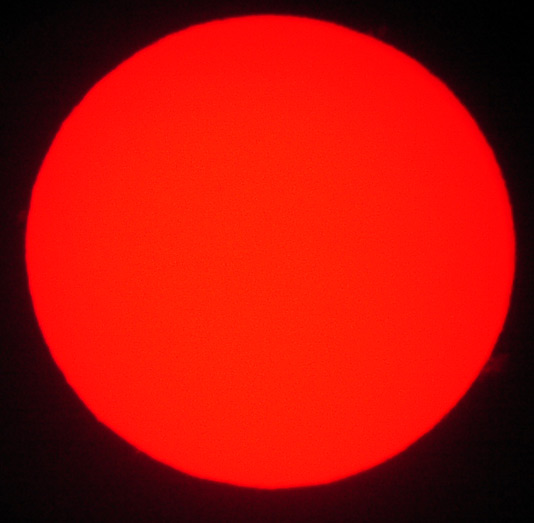
Before the transit, on October 31, we tried an experiment. We tried taking a photograph of the sun using a digital camera and a Coronado telescope. This was the result.
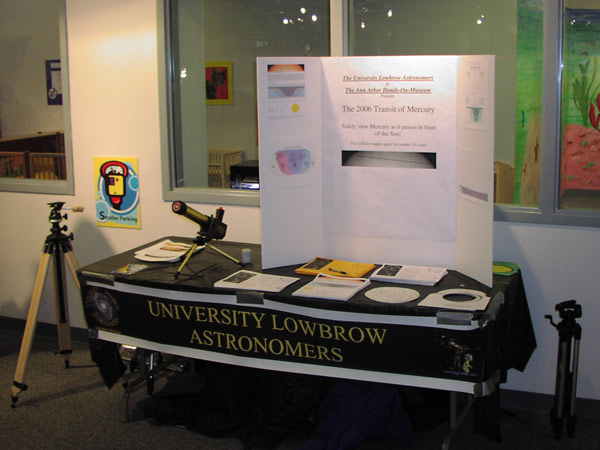
The day of the transit, November 8, 2006, the Lowbrows set up a table at the Ann Arbor Hands-On Museum. Unfortunately it was cloudy, and setting up telescopes outside would have been pointless.
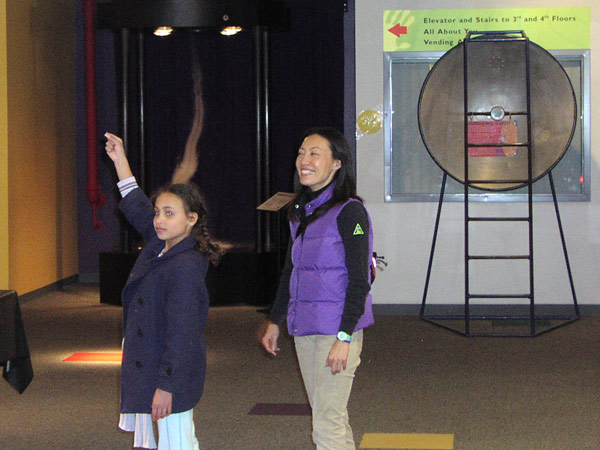
To demonstrate how a transit works and how empty space is, a small pin was used to represent the planet Mercury (the young woman is holding the pin in her hand, but it is too small to see with this resolution). The yellow circle on the wall in the back represents the sun. Not seen in this photo, and several feet away, a different small pin represented the planet Earth.
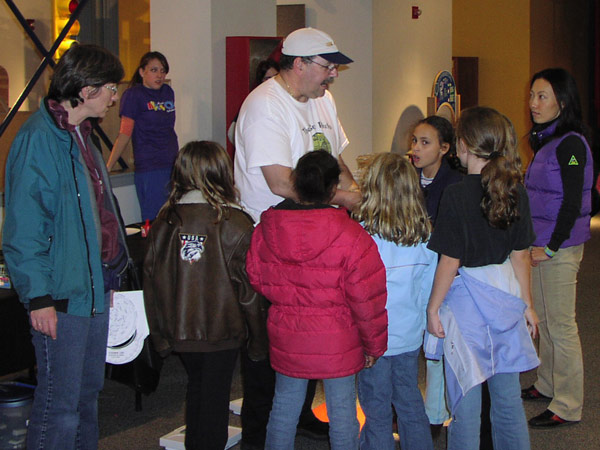
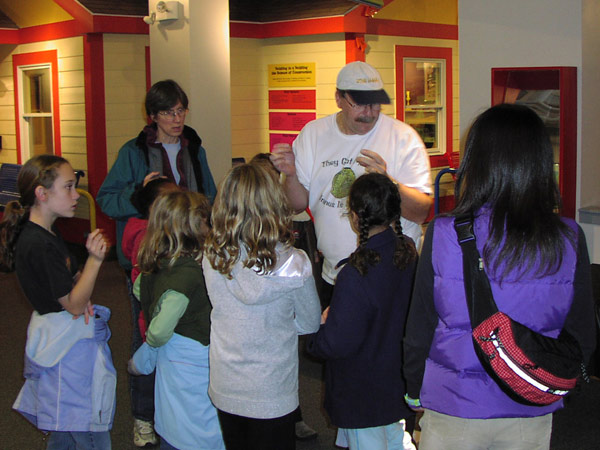
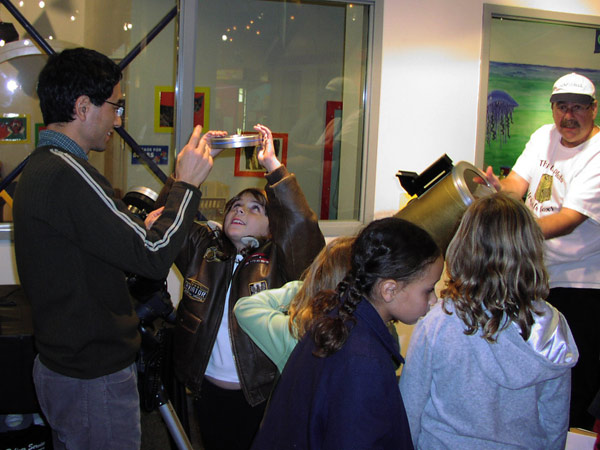
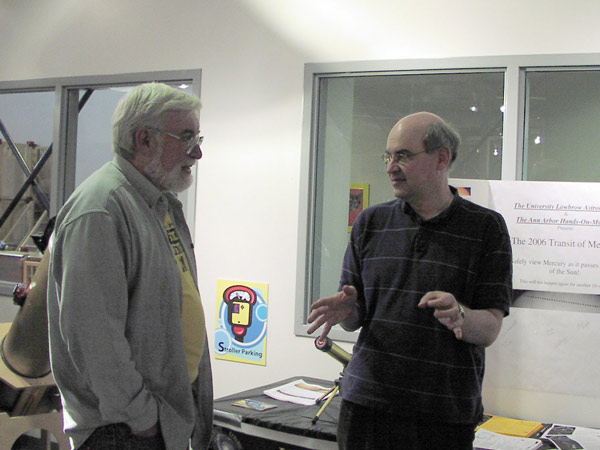
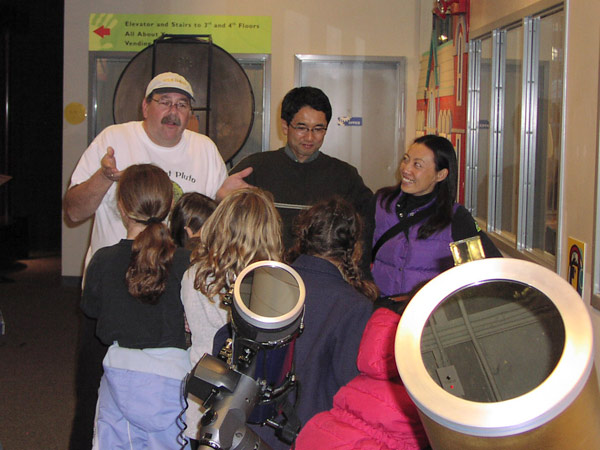
Various Lowbrow volunteers spent the afternoon talking with visitors as seen in the photos above.